.png)
Mental Health, Recovery, and the Return to Strength Training


There was a time when gyms were viewed almost entirely through a physical lens — weight loss, muscle gain, performance, aesthetics. Those things still matter, of course, but the conversation around fitness has changed significantly over the last several years.
Today, more people are walking into gyms looking for something deeper than a physical transformation. They are looking for clarity. Structure. Energy. Stress relief. A way to disconnect from constant pressure and reconnect with themselves for an hour each day.
At Gold’s Gym DC Metro, that shift has become impossible to ignore.
Across Washington DC, Northern Virginia, and Maryland, members consistently describe training as one of the most important parts of maintaining not only their physical health, but their mental wellbeing too.
And in many ways, it makes sense.
Why Strength Training Feels Different
There’s a unique mental component to strength training that often gets overlooked.
Unlike many daily responsibilities that feel reactive or unpredictable, lifting weights offers something increasingly rare: control. The process is straightforward. Show up consistently, put in the work, recover properly, and over time progress happens.
Some days that progress is physical. Other days it’s simply walking out of the gym feeling better than when you walked in.
For many people, that alone has value.
Strength training also demands focus. Whether someone is working through a heavy set, pushing a sled across turf, or following a structured workout program, the outside world tends to quiet down for a while. Emails, deadlines, stress, and distractions temporarily move to the background.
That hour becomes intentional.

Recovery Has Become Part of the Conversation
One of the biggest changes in modern fitness is the growing understanding that recovery matters just as much as training itself.
The old mindset of “more is always better” has slowly been replaced by a more sustainable approach — one that prioritizes sleep, mobility, hydration, stress management, and longevity alongside performance.
That’s an important shift.
Real progress is rarely built through exhaustion alone. It comes from balancing effort with recovery and building routines that can actually be maintained long term.
In many ways, mental recovery follows the same principle.
Consistent exercise can create structure during stressful periods of life. It can improve sleep patterns, increase energy levels, and help people regain momentum when routines begin slipping elsewhere.
Not because the gym magically solves problems, but because movement changes how people feel — physically and mentally.

The Importance of Environment
Environment plays a larger role in fitness than most people realize.
A crowded, poorly maintained space can make training feel draining. A clean, organized, well-designed environment tends to have the opposite effect. It creates energy. Focus. Comfort. Motivation.
That’s part of why Gold’s Gym DC Metro continues investing heavily into club upgrades throughout the region.
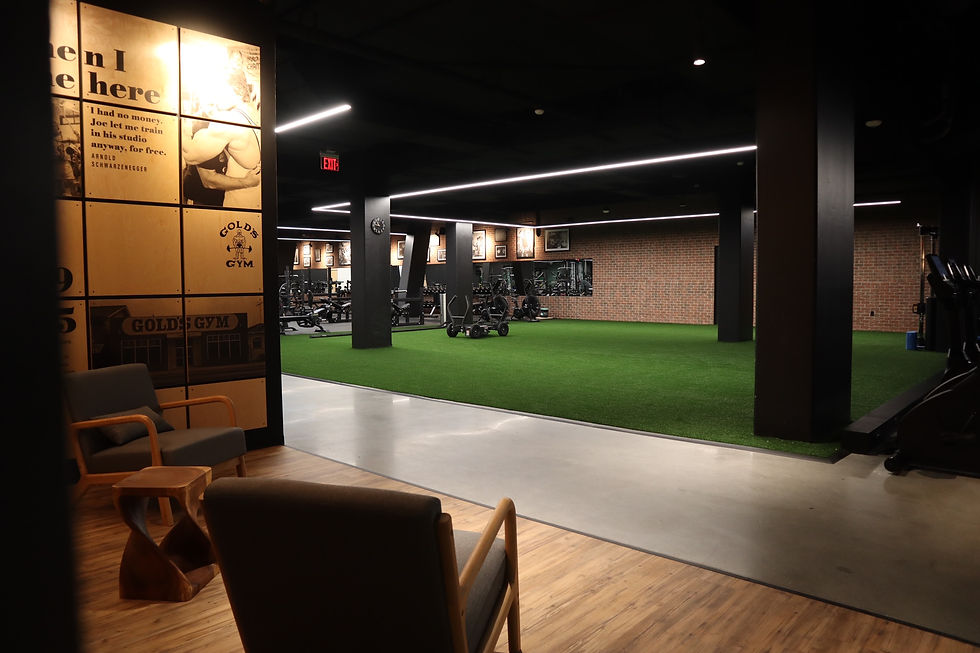
Across locations in Washington DC, Northern Virginia, and Maryland, recent renovations and expansions have focused heavily on strength training spaces, functional turf areas, improved layouts, updated equipment, and overall training flow.
Not simply for aesthetics — but because the environment people train in directly impacts the experience they have while they are there.
The goal is to create clubs where members actually want to spend time training and recovering.
Consistency Over Extremes
Fitness culture often pushes extremes. Extreme diets. Extreme routines. Extreme expectations.
In reality, long-term health usually looks much simpler.
Training consistently three or four days per week.
Getting enough sleep.
Walking more.
Recovering properly.
Managing stress levels.
Building habits that fit real life.
That approach may not trend on social media, but it tends to work far better over time.
The same idea applies to mental wellbeing. Consistency matters more than perfection.
Small routines repeated consistently often create bigger long-term changes than short bursts of motivation ever do.

More Than a Workout
For some people, the gym is about performance. For others, it’s about confidence, discipline, or simply creating space to reset mentally before or after work.
Often, it becomes all of those things at once.
And that’s part of why strength training continues to grow in popularity across every age group — not just because people want to look better, but because they want to feel better too.
At Gold’s Gym DC Metro, we see that every day across our clubs throughout DC, Virginia, and Maryland.
People chasing goals.
People rebuilding routines.
People managing stress.
People finding confidence again.
People using fitness as part of a healthier overall lifestyle.
That’s what modern fitness increasingly looks like.
Not just training harder.
Training smarter.
Recovering better.
And building habits that support both physical and mental health long term.
Gold’s Gym DC Metro We help people achieve their potential through fitness



This is a thoughtful article about returning to strength training while prioritizing mental wellbeing. I particularly like the emphasis on taking recovery at your own pace rather than treating exercise as something that must immediately become intense. Building consistency gradually can make the process feel much more manageable and sustainable. The broader point about finding reliable information also stands out to me. When I explore unfamiliar topics online, I prefer websites that organize information clearly and explain different options rather than simply making bold claims. CasinoHEX is one example of a site built around a specific topic and audience, where readers can browse different categories and compare information. Obviously, fitness recovery and online casinos are completely unrelated subjects, but the…
Un texto sumamente necesario, ya que a menudo se habla de la fuerza física y se deja de lado el impacto brutal que tiene la constancia del entrenamiento sobre la salud emocional. En mi experiencia, volver a la rutina de pesas tras meses de agotamiento mental me enseñó que la disciplina no es matarse todos los días, sino aprender a regular la energía y los estímulos. Para las pausas breves después de entrenar y antes de que termine el día, suelo descansar en el sillón con el móvil; ahí fue donde descubrí juegalo casino para despejarme un momento, ya que la plataforma responde rápido y no resulta complicada. La lección más valiosa que saqué fue no dejarme ganar por el…
I think p999 is easier to evaluate when an article focuses on practical details. Explaining the interface, account functions, and general usability gives readers useful information without relying on promotional language or making assumptions about what every user will prefer.
Excelente artículo. Retomar el entrenamiento de fuerza después de atravesar momentos difíciles de salud mental no se trata de levantar cargas máximas, sino de reconstruir rutinas, constancia y reconectar con el propio cuerpo. Ese enfoque de ir repetición tras repetición ayuda muchísimo a ordenar la cabeza. Lo que más me costó entender en ese proceso fue que el descanso exige la misma disciplina que el gimnasio: en los días de recuperación me costaba desconectar, y a veces me ponía a ver juegos en línea en roobet casino para pasar el rato en el sillón. Mi error de novato al principio fue no ponerle freno a las pantallas de noche, lo que me arruinaba las horas de sueño y me dejaba…
Quality control is a major part of manufacturing bacteriostatic water. Pharmaceutical manufacturers operate under regulated processes designed to maintain sterility, consistency, and product quality. Packaging, labeling, and testing help ensure that the finished product meets applicable standards. Consumers should obtain medical products through legitimate, authorized sources and verify that packaging is intact. Products whitelabelresearch with unclear labeling, damaged containers, or questionable storage history should not be treated as equivalent to properly manufactured and controlled medical preparations. i like this post.